AVA
Office Hub
Project Location: Tehran, Iran
Role: Freelance Architectural BIM Modeller
Project Status: Completed (Built)
Period of Contribution: 06/2019 – 08/2021
Client: Private Client
Credits & Ownership: Collaborative, Third-Party Ownership
—Portfolio Note:
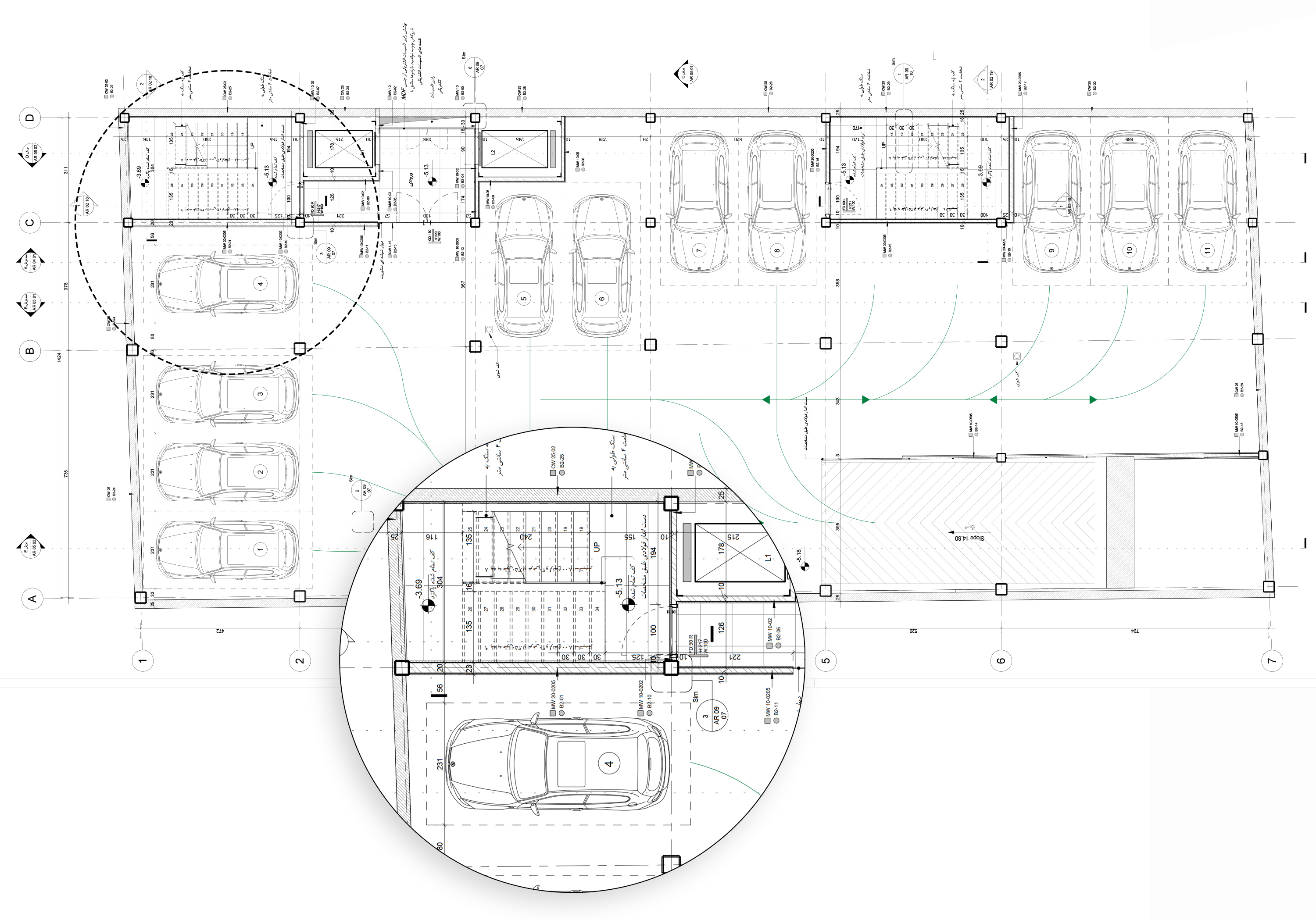
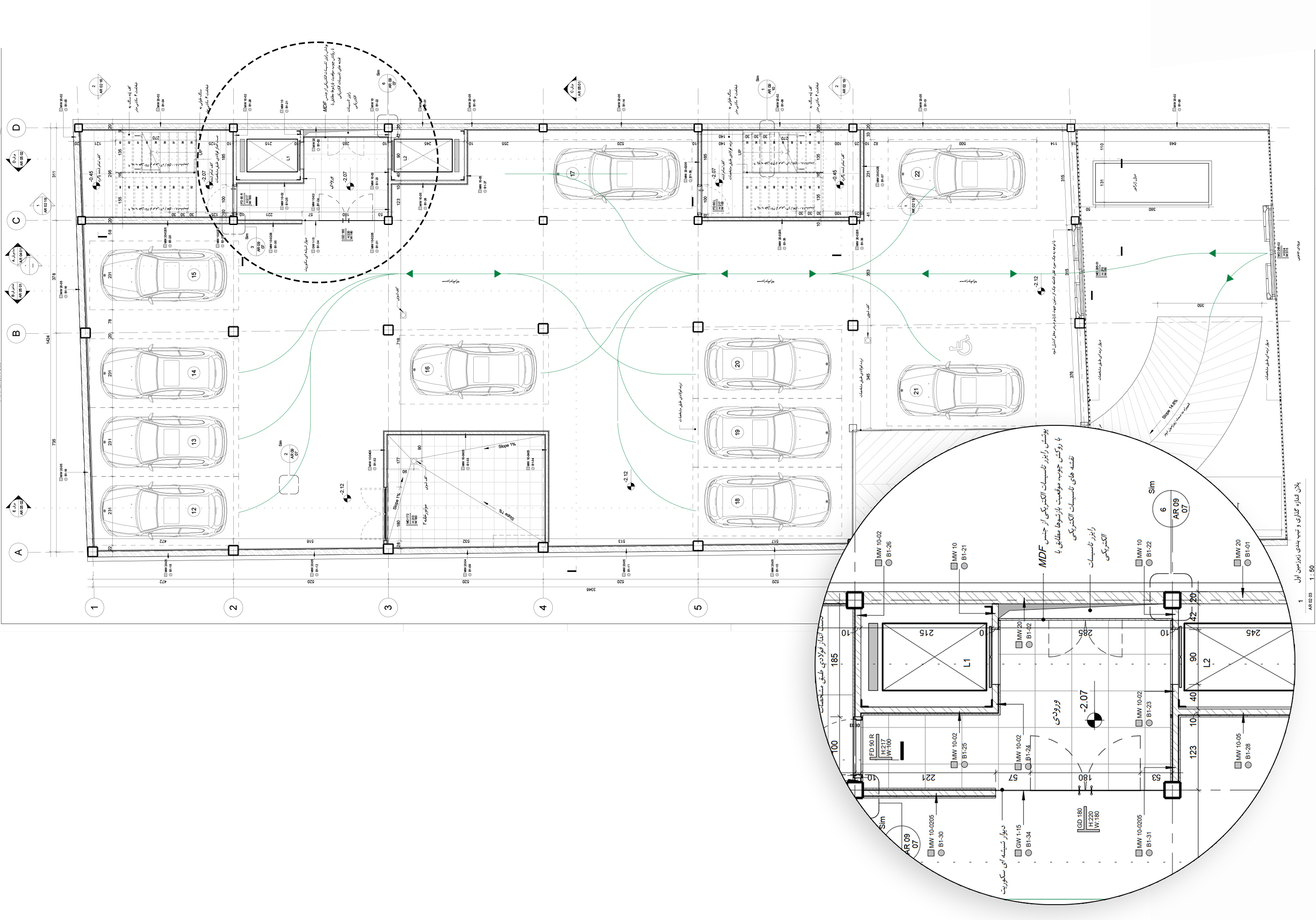
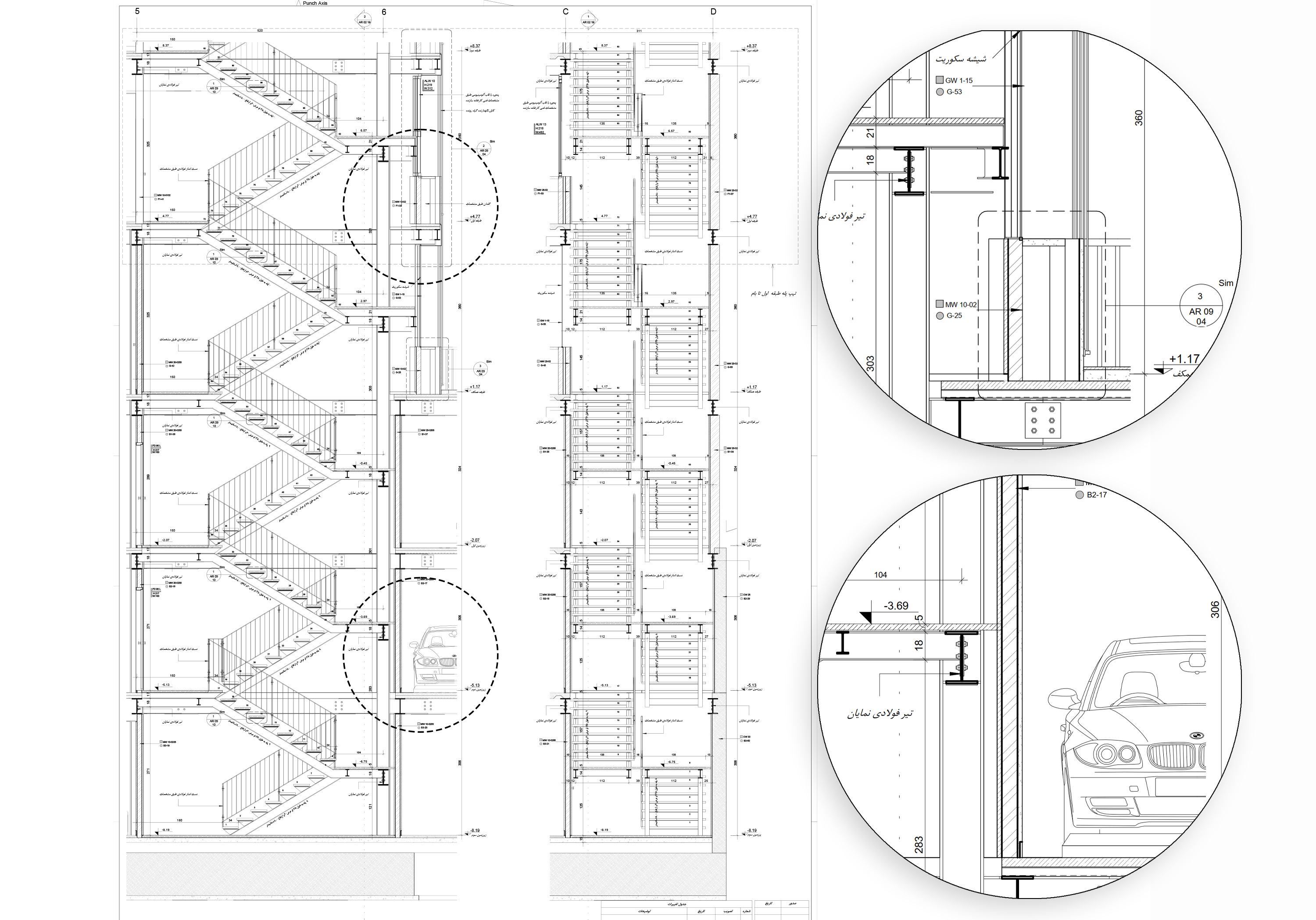
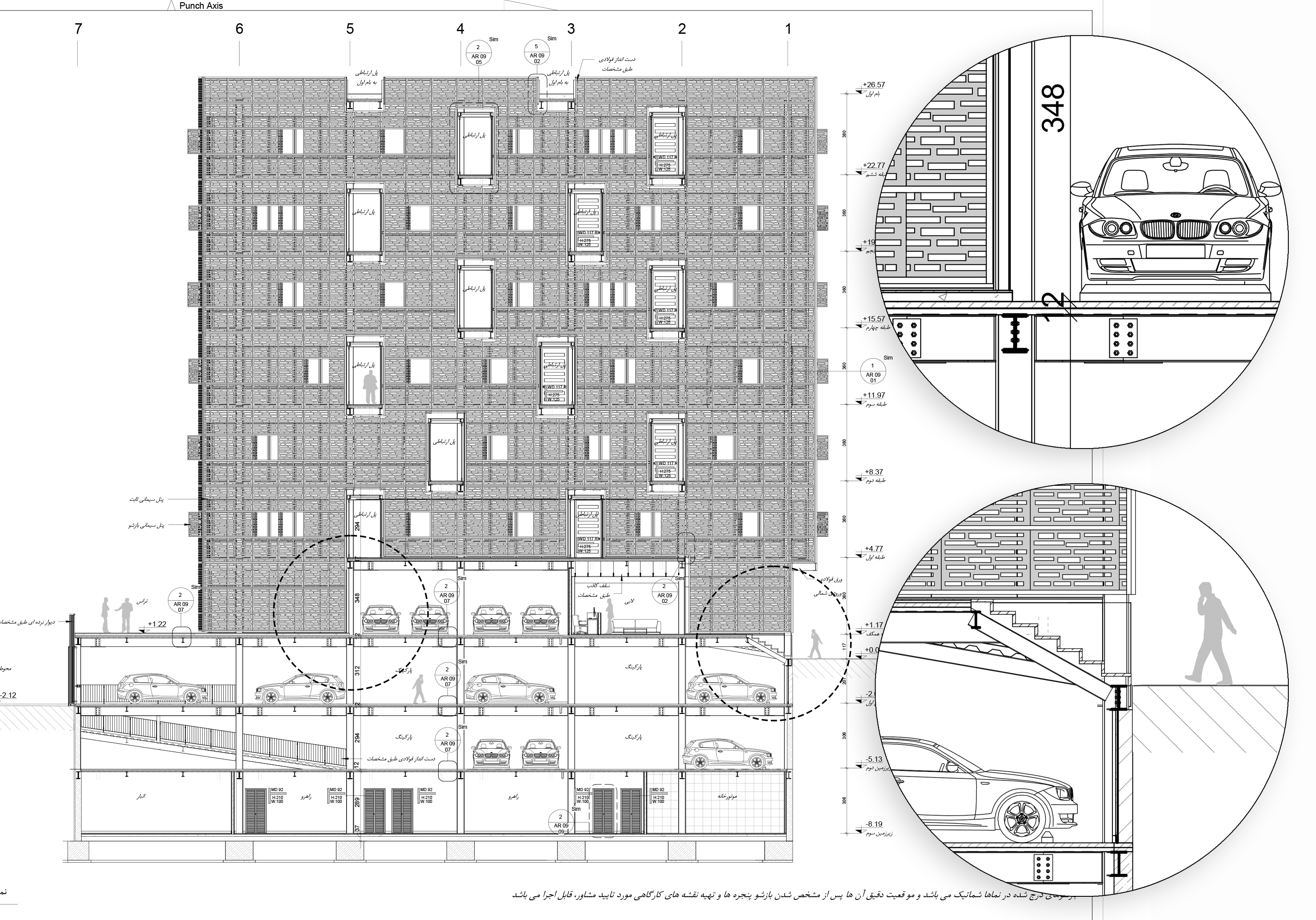
The material shown on this page is a selective, simplified, and non-buildable representation of a collaborative project. More information is available at the end of this page and in the Legal Notice & Copyright section.
—Project Overview:
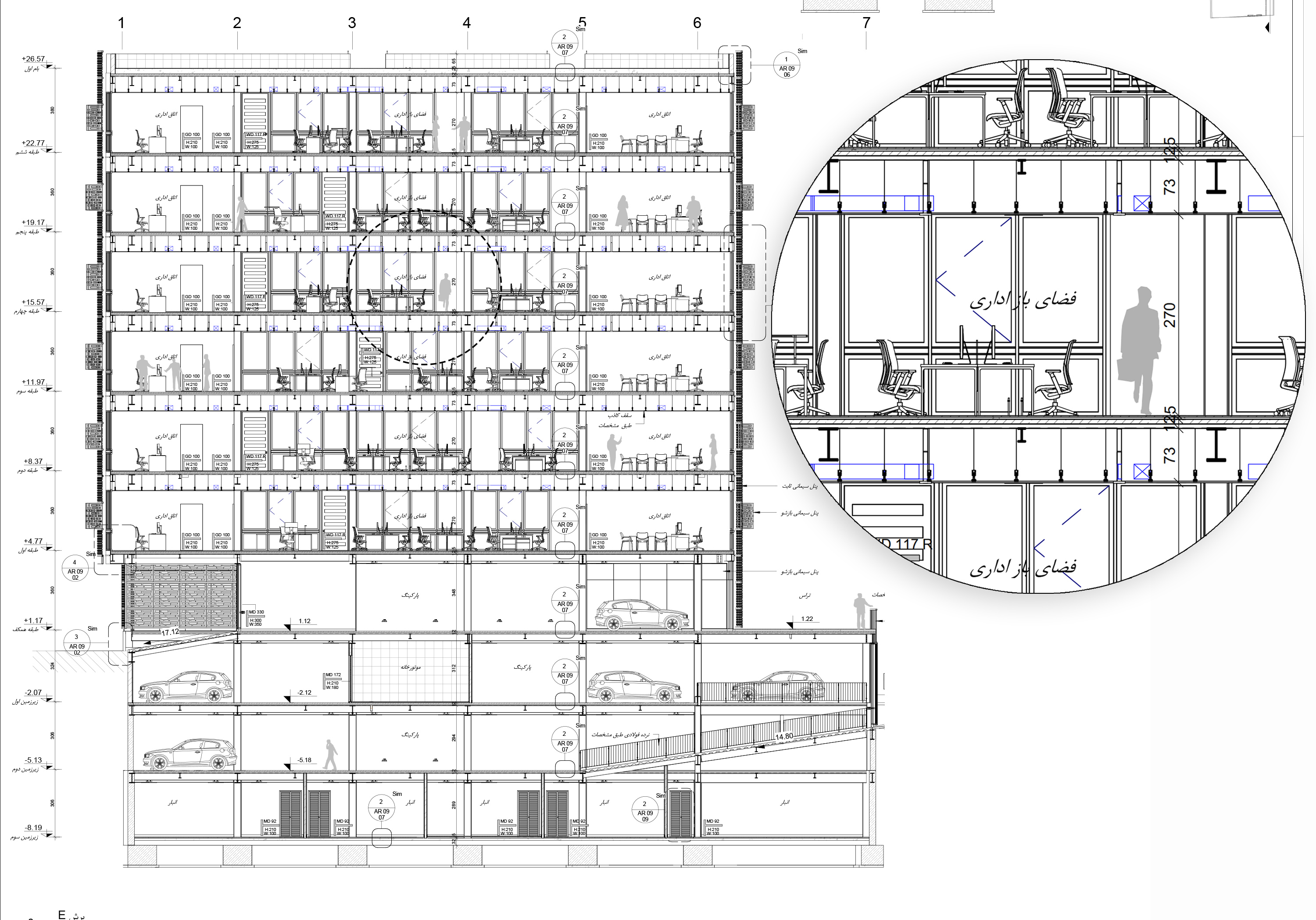
This project is a 12-storey office building located in the city centre of Tehran. I joined during late design development and execution planning, at a point when the architectural and structural 2D documentation had already been completed. A detailed 3D model existed in Rhino; however, due to increasing requirements from the client and construction teams, the project transitioned to a Revit-based workflow to support higher levels of detail and interdisciplinary coordination, particularly for MEP systems.

—Context & Technical challenges:
I joined as an Architectural BIM Modeller within a two-person architecture team while the firm was in an early BIM adoption phase. The project lacked an active Common Data Environment and the previously prepared BIM Execution Plan was not implemented. These conditions produced key technical challenges: interoperability and data loss during Rhino → Revit transfers, inconsistent modelling protocols and naming conventions across disciplines, and varying LOD definitions that complicated model integration.

—Role & Modelling Scope:
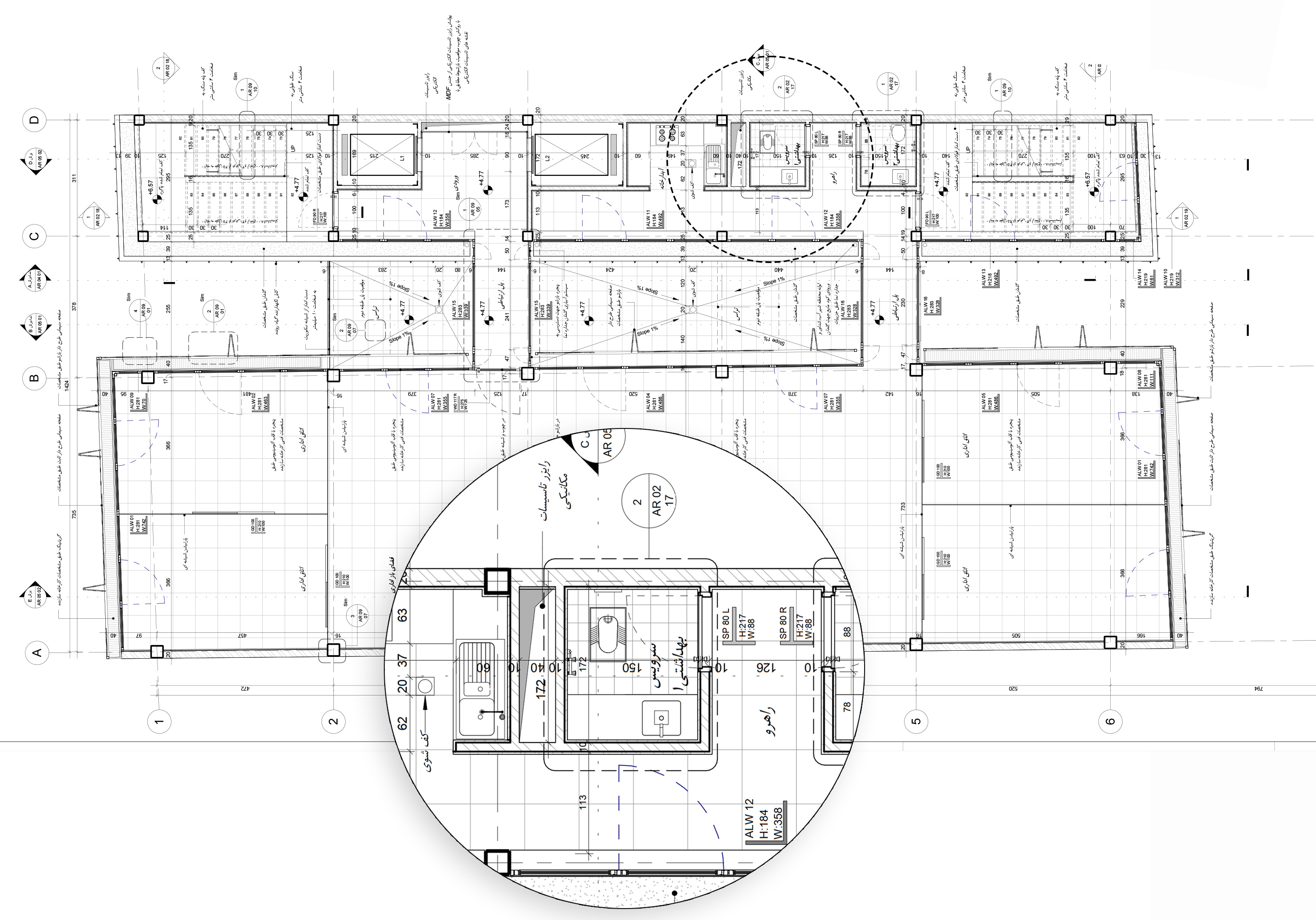
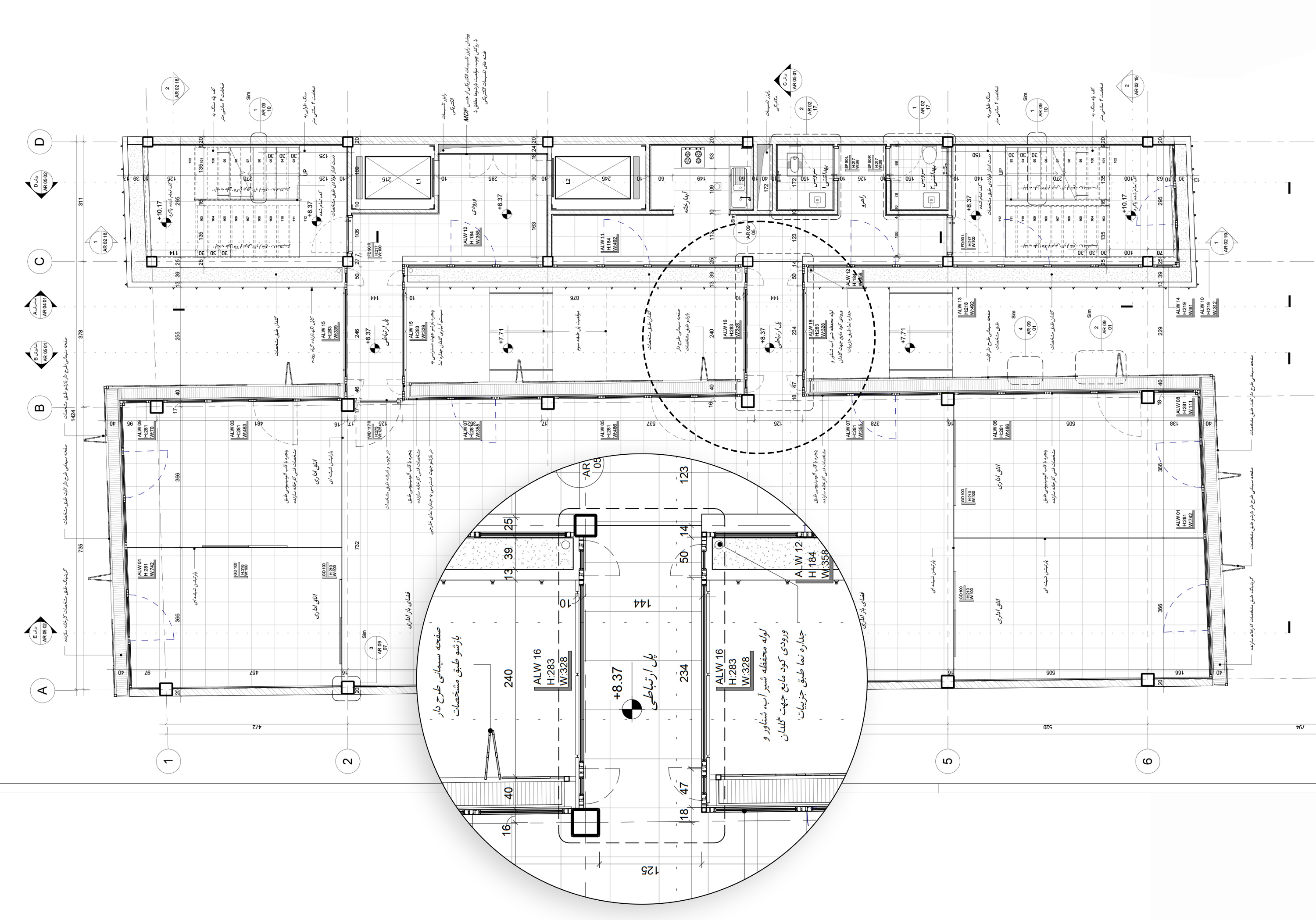
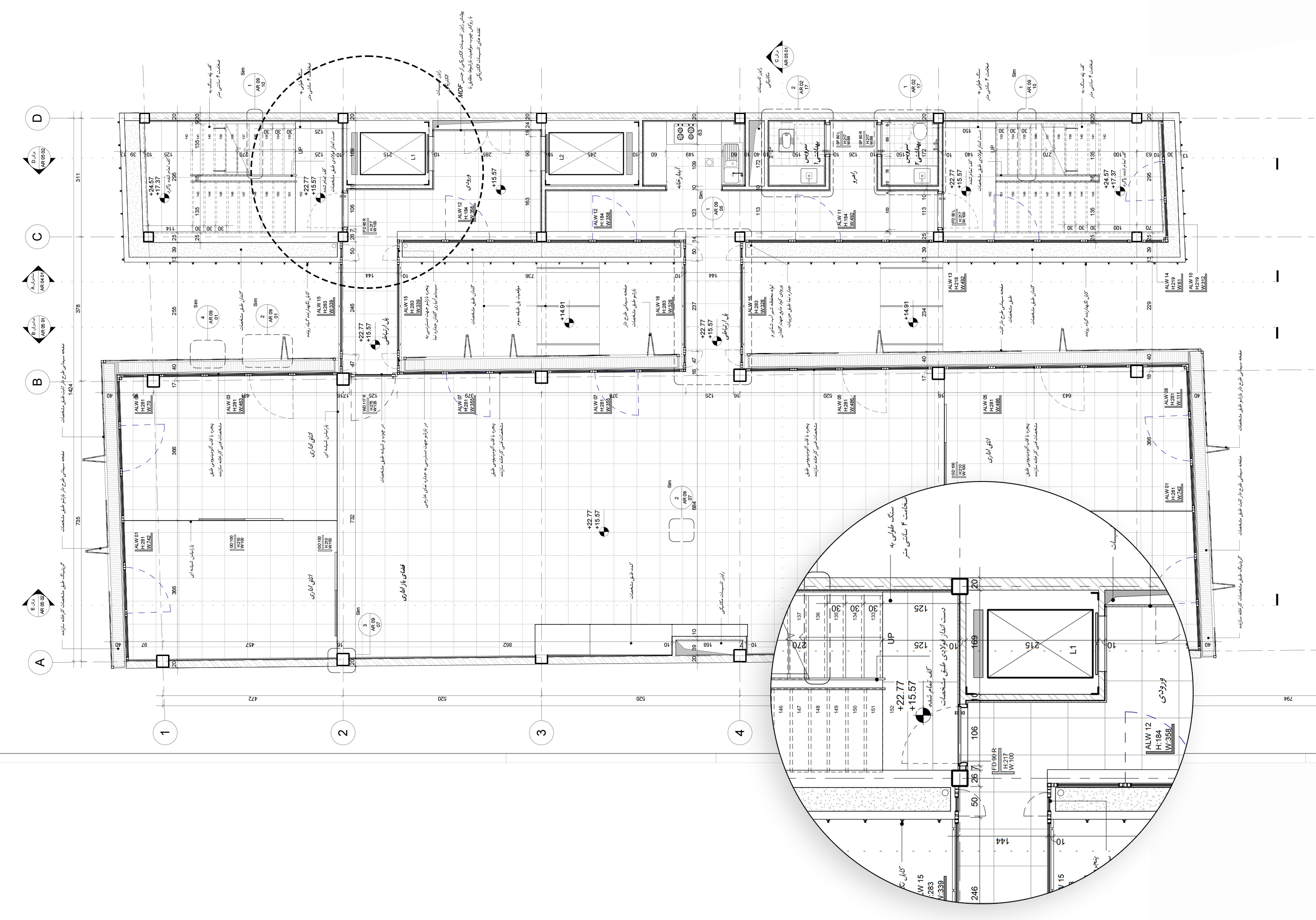
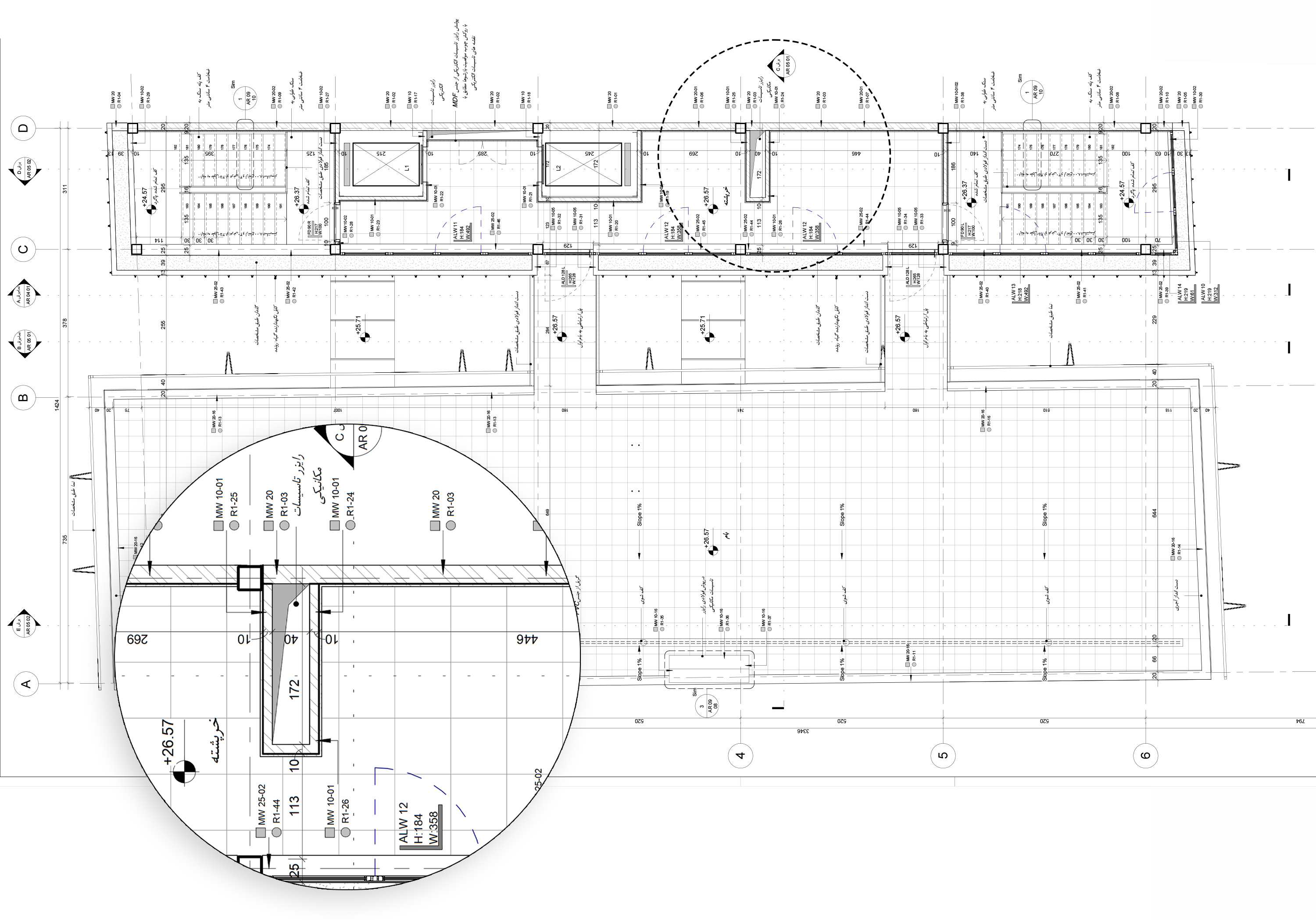
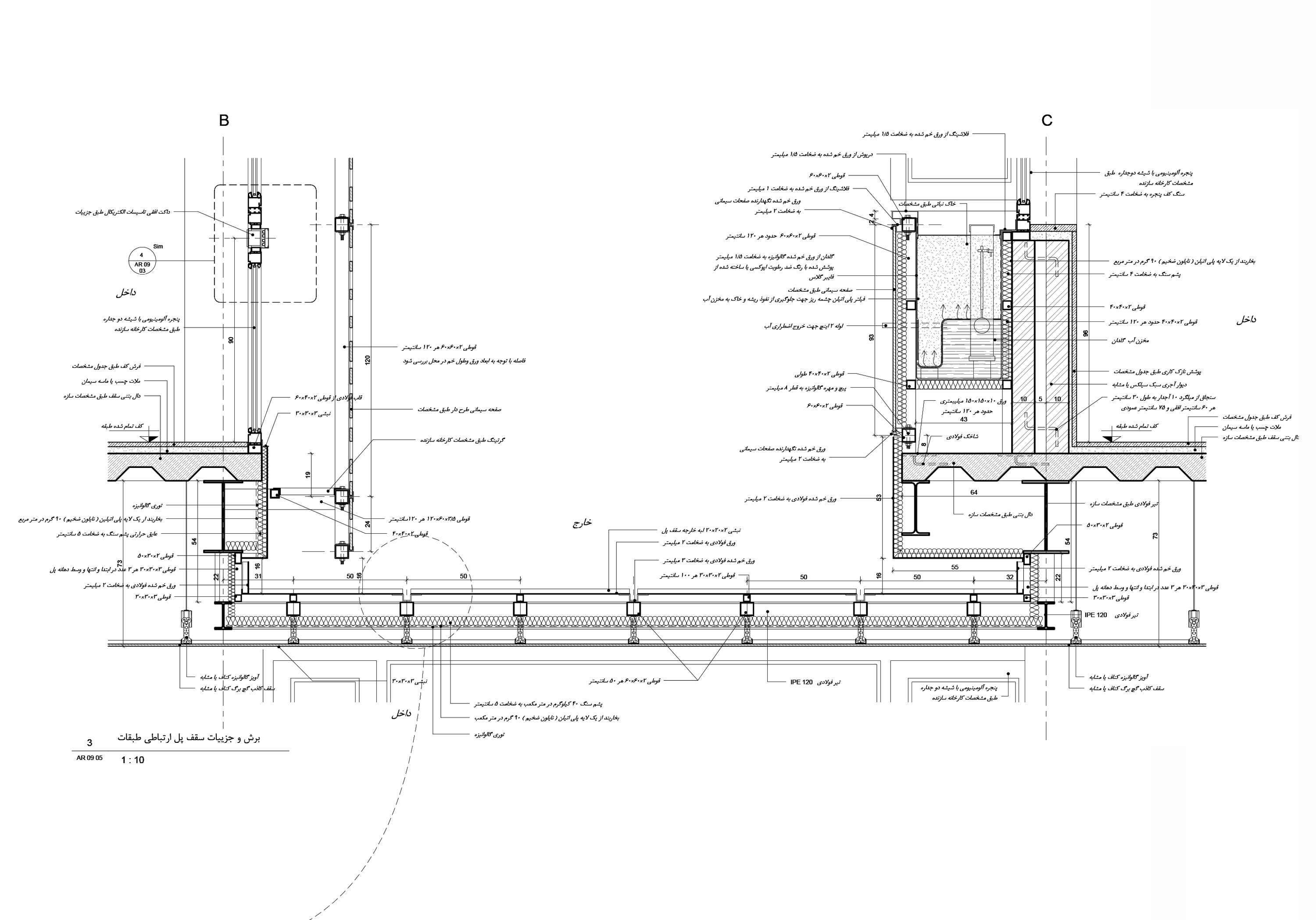
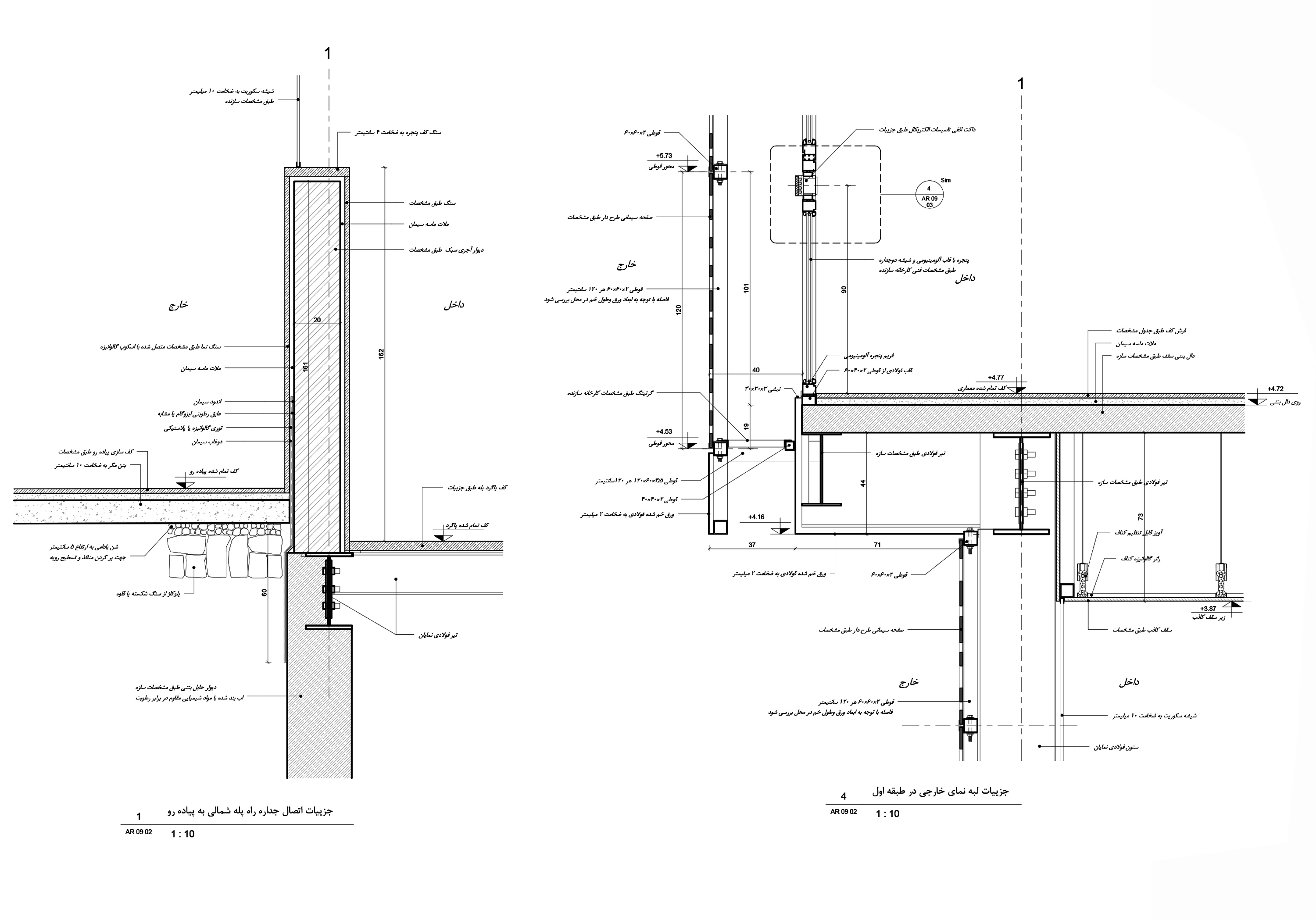
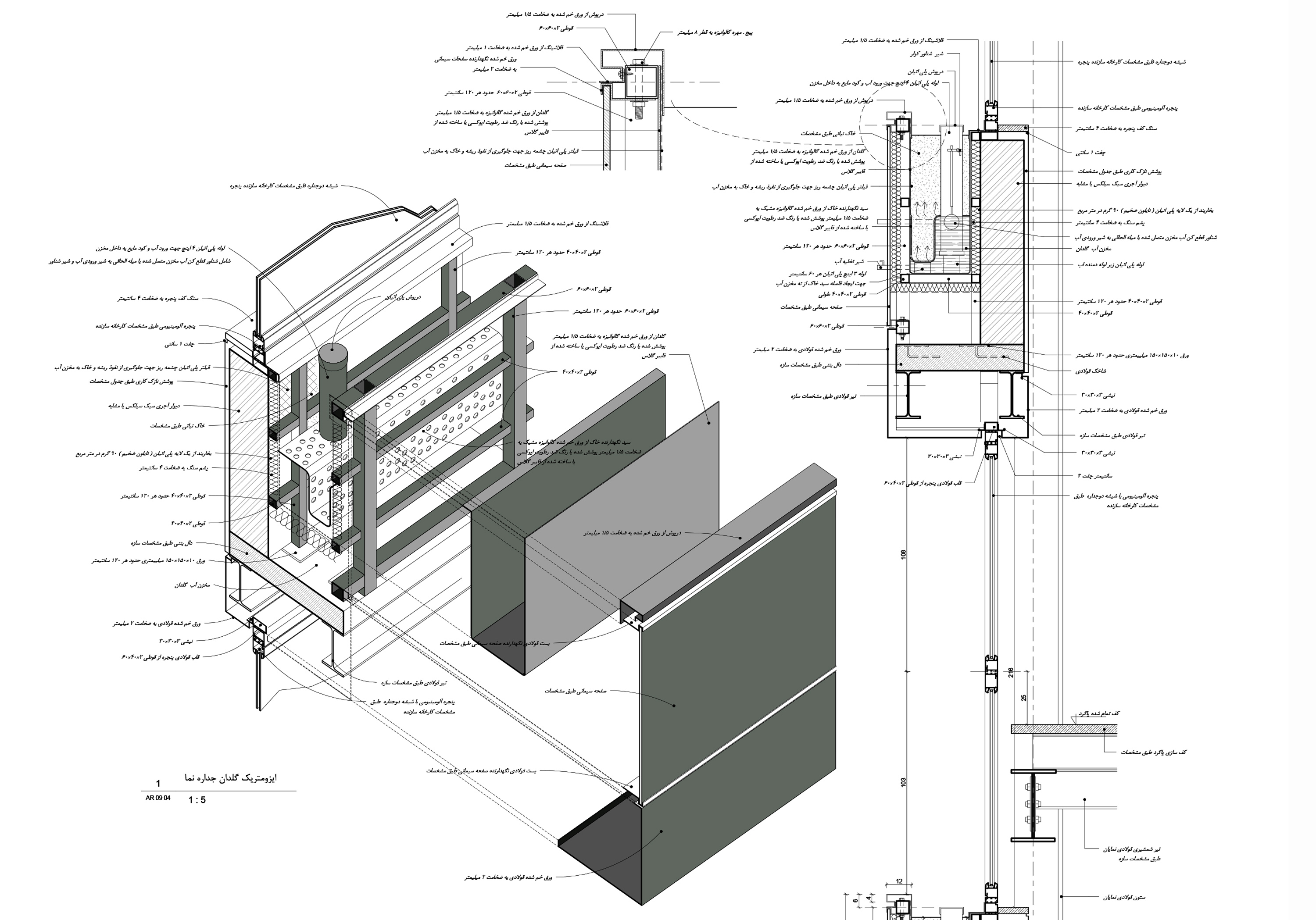
My primary responsibility was the development of architectural BIM models in Revit at high LODs, using approved briefs, existing models, and pre-approved technical documentation. Components were modelled to different LODs according to construction relevance: typical elements (floor assemblies, exterior wall layers) at lower LODs, and less common systems for the contractor—notably the ventilated façade and its connections—at higher LOD to support constructability.
-1400.webp "© Amiradel Shamshirgaran")
—Coordination & Collaboration:
Because coordination mechanisms were limited, I temporarily joined structural and MEP modelling teams to review modelling approaches and confirm alignment with architectural requirements. Coordination was organised around monthly Navisworks Manage clash detection cycles and follow-up interdisciplinary meetings. I prepared meeting briefs and technical reports, reported architecture-related clashes, and served as the architectural point of contact during resolution sessions; my work was reviewed by the Architecture Department Head.

—Constraints & Responsibilities:
The project was primarily constrained by time (budgets and regulatory approvals had already been secured) so rapid production of execution-level models was required. Design decisions, permitting, and overall BIM management were outside my scope. My remit focused on producing model-based deliverables and supporting coordination rather than project-level decision making.
—Deliverables & Outcome:
At the close of my involvement I delivered high-LOD federated Revit and IFC models along with monthly clash reports and coordination briefs. These outputs were used by the wider project team to clarify interfaces, reduce coordination ambiguity, and support execution planning and procurement activities.

—Reflection & Key Learnings:
This project was my first sustained exposure to BIM within a real project environment, where challenges emerged less from modelling itself and more from how information was structured, exchanged, and coordinated across disciplines. Inconsistent naming, unclear modelling assumptions, and partial interoperability only became apparent during coordination cycles, when separate models were reviewed together and their limitations surfaced through clashes, rework, and follow-up discussions.
Through this process, BIM became tangible to me not as a standalone tool but as a sequence of interdependent workflows. The presence (or absence) of a functioning CDE, a clearly applied BEP, and shared modelling conventions directly influenced how much effort was required to maintain consistency and constructability. Rather than learning BIM as a set of rules, I experienced it as a method for managing information loss under real coordination pressure.
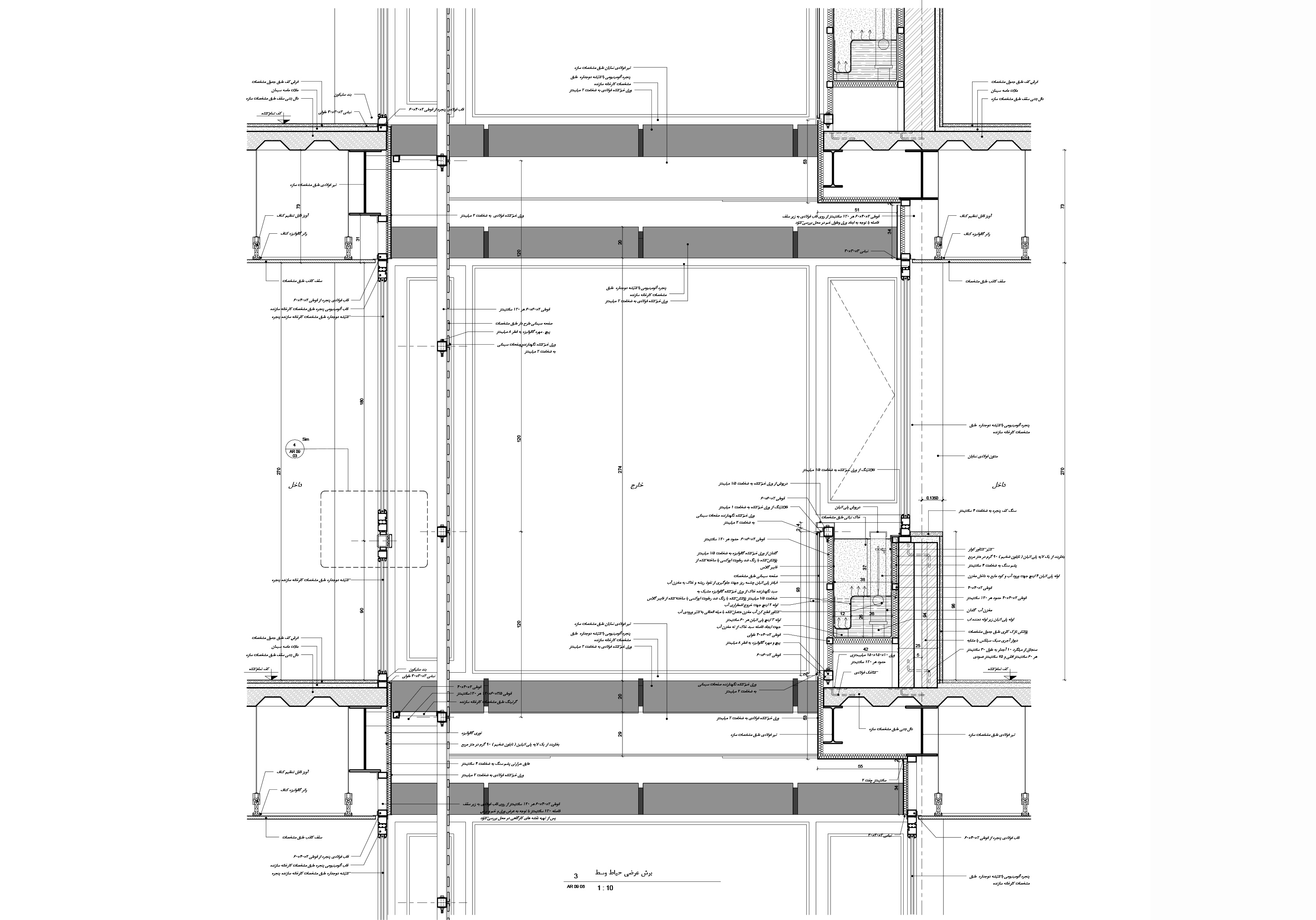
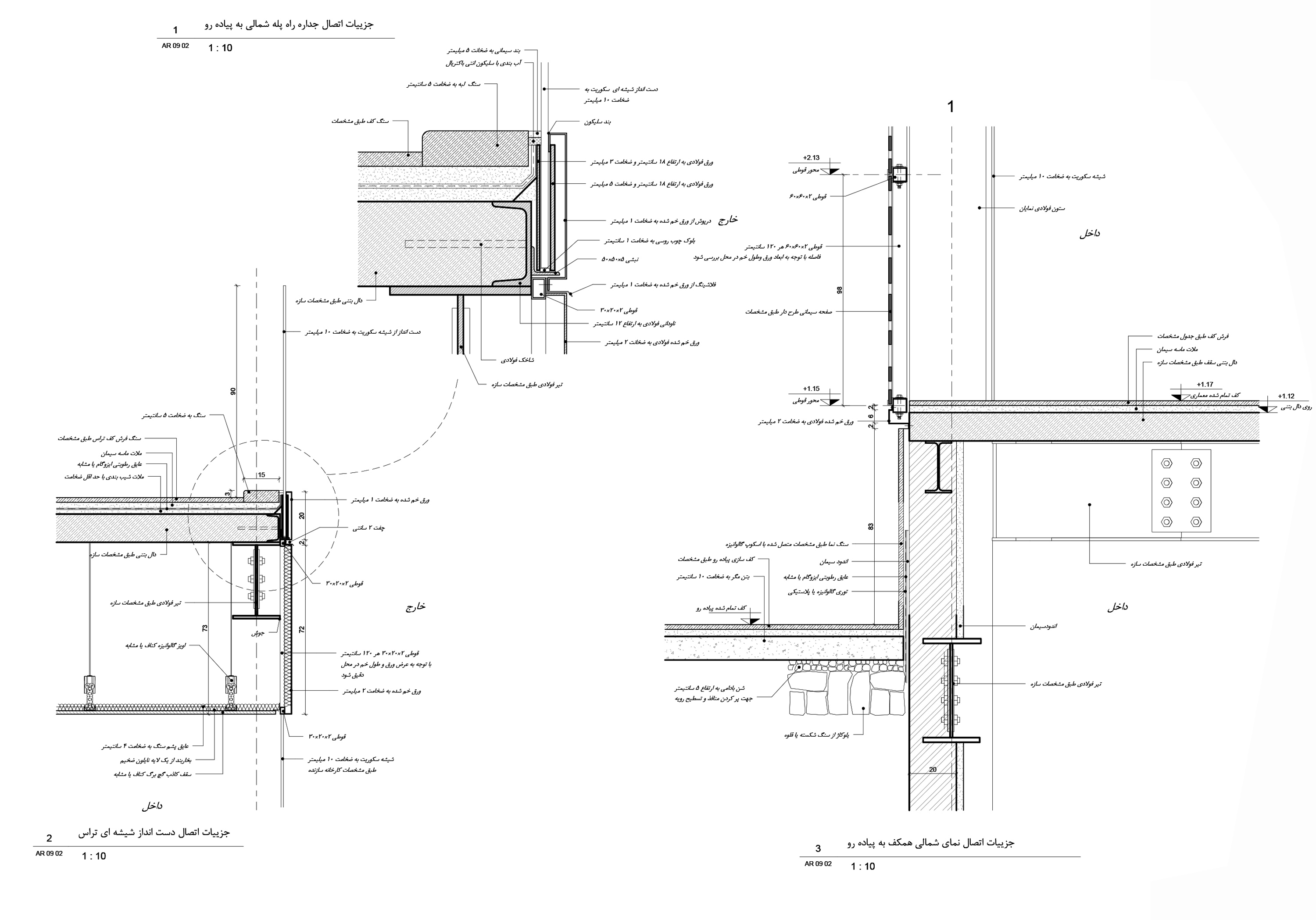
—Project-Specific Portfolio Disclaimer:
This project was developed as part of a collaborative design and delivery team. The materials presented on this page are selective, simplified, and modified representations, prepared solely for portfolio and academic purposes. The drawings, diagrams, and renderings shown may include simplified or cropped views, partial systems, and redacted or altered notes, dimensions, and technical information. The technical materials have been intentionally selected from non-final stages of the project, such as early design or execution-development phases, or from components that were later revised or significantly changed. Accordingly, the material presented here is non-final and non-buildable and does not represent issued, coordinated, tender, or construction documentation. It is provided only to illustrate the author’s contribution to the project. Authorship is limited to the specific work scope and contributions described on this page. Project copyrights and ownership remain with the respective client and/or firm unless otherwise stated. The full Portfolio Disclaimer and detailed copyright information applicable to this project are provided in the Legal Notice & Copyright section of this website.